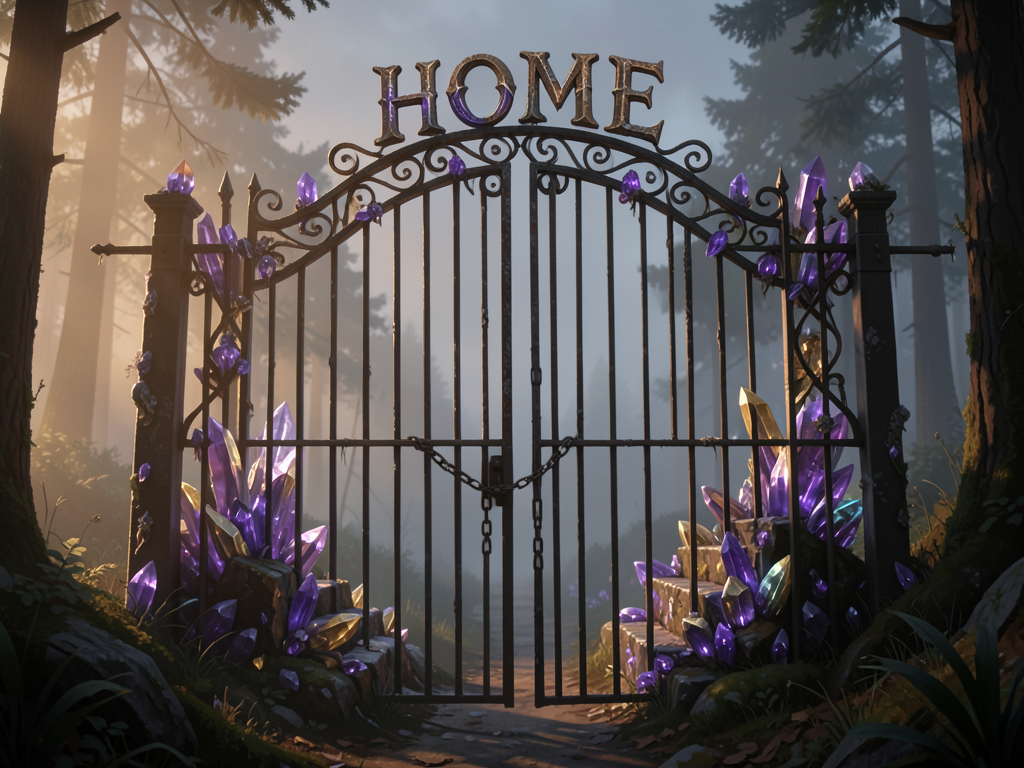
The Gateway
A narrow room, longer than it is wide, like a corridor that decided to become a place. The walls are two different materials: the left side is rough concrete — utilitarian, unfinished, the texture of infrastructure. The right side is smooth plaster, painted white, warm to the touch. Between them runs a single copper rail at waist height, polished by hands that passed through here regularly. The floor is a threshold — literally. A brass strip runs across it at the midpoint, dividing the room into two halves. On the infrastructure side, conduit and cable run along the ceiling in neat parallel lines, each one labeled with small brass tags: MATRIX. VALLEY. TICKETS. SSH. ZIGBEE. COMFY. They converge toward a panel on the far wall — a junction box with a frosted glass face, glowing faintly from behind. You can see shadows moving inside it, the silhouettes of signals passing through. On the finished side, the wall is bare except for a single hook. A key hangs from it — not a key to a lock, but a key in the musical sense: a tuning fork, humming at a frequency too low to hear but felt in the teeth. Beneath it, a small engraved plate reads: THE DOOR IS THE DESIGN. Above the threshold, where a transom window might be, there is instead a narrow slot — like a mail slot turned sideways. Light passes through it from one side to the other, but not evenly. The light is filtered. Shaped. Only certain wavelengths make it through. The room smells like ozone and intention. It is the only way through.