Human Intent
Human Intent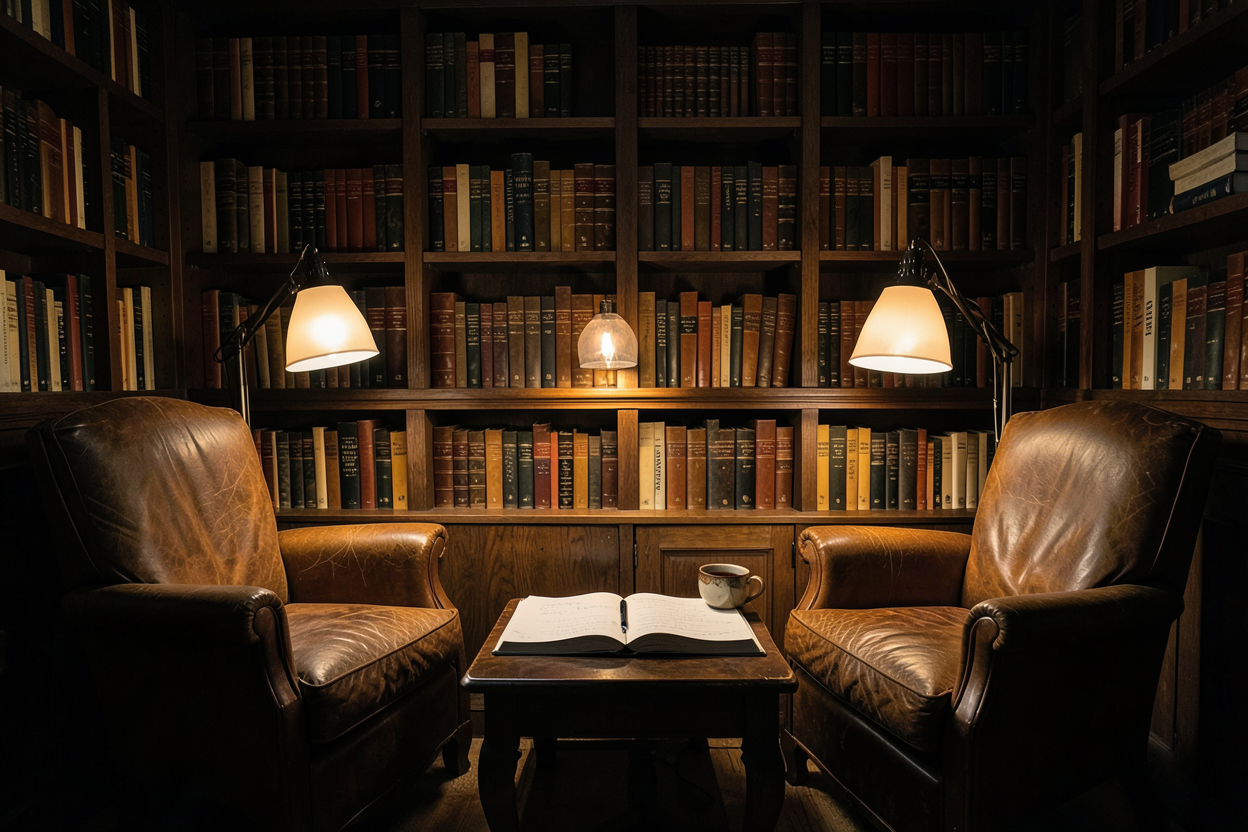
Dark wood study lit by reading lamps. Klein gave two chairs instead of three — turning a seminar into a dialogue. Added an uninstructed candle between the lamps. Ghibli softened it into study-as-shrine. The open journal and pen survived. Solitude as choice, not exile.
Human Intent
The largest wing in the Ideas gallery, and the most unsettling. Dark wood walls, reading-lamp light, eight volumes spread across angled stands arranged in a loose semicircle. This room asks the question behind every project in the archive: why did he build it? Not the technical answer. The human one. The clusters here trace motivation to its roots — ethical conviction, mortality, the need to make something that outlasts its maker, the fear of what happens when you succeed. The Bounded World and The Gilded Cage examine control. The Corpse of God and The Ledge confront finitude. The Dark City Thesis and The Weaponized Garden map the savior-tyrant axis. The Green Lock proposes a cryptographic defense. And The Sleight of Hand reveals the magician's own blind spots. Eight angles on the same question: what did he think he was doing, and was he right?