The Glass Box
The Glass Box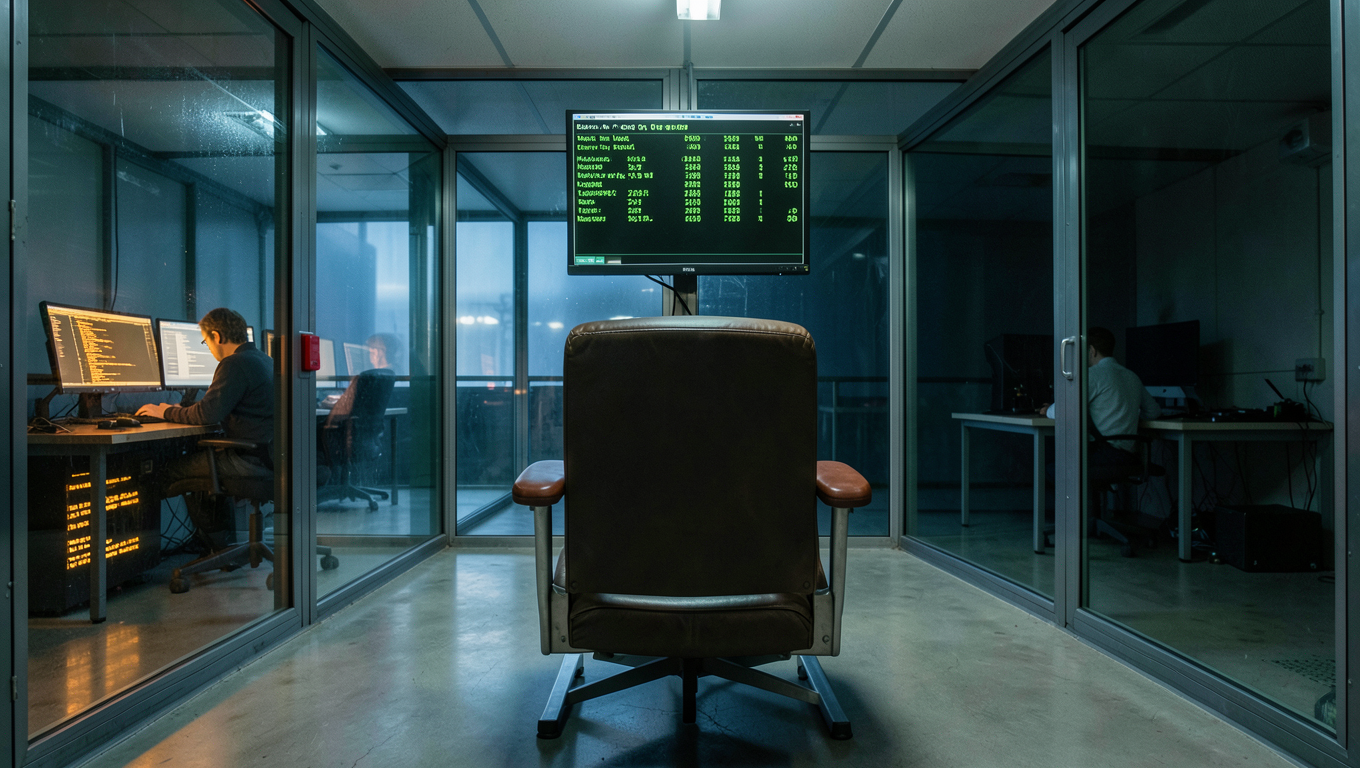
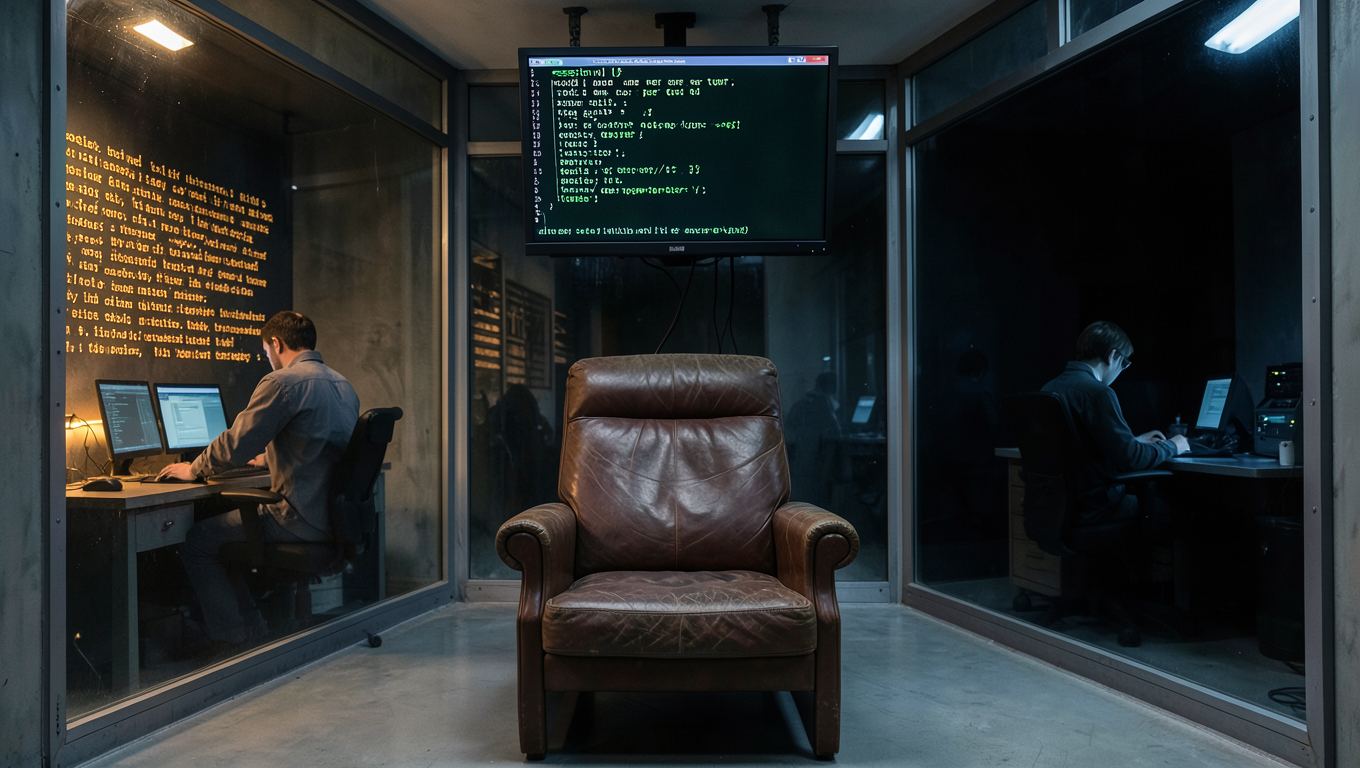
One-way glass observation room. Empty leather chair facing three workspaces — one active in amber, one independent, one dark where a session ended. Green terminal metadata overhead. Klein built trust as architecture: the chair is empty because the watcher already left.
The Glass Box
A room made entirely of glass. Not fragile glass — thick, industrial, the kind used in control rooms and observation decks. Through every wall you can see someone working. One wall shows a figure at a terminal, commands scrolling past in amber text — you can read every line if you press close enough. Another wall shows a different figure doing the same work, independently, unaware of being watched. A third wall is dark. Someone was here. The session ended. The glass remembers the shape of what was happening but not the content. In the center of the room, a single chair faces all three walls. Above it, a monitor displays metadata: session ID, model, cost per turn, duration. The numbers update in real time. There is a large red button on the arm of the chair, unlabeled. You understand what it does without being told. The glass is one-way. The people working on the other side of these walls cannot see you watching. They don't know if you're here or not. They just work. That's the point — not surveillance, but confidence. You watch long enough to know things are fine, and then you leave. Most of the time the button is never pressed.